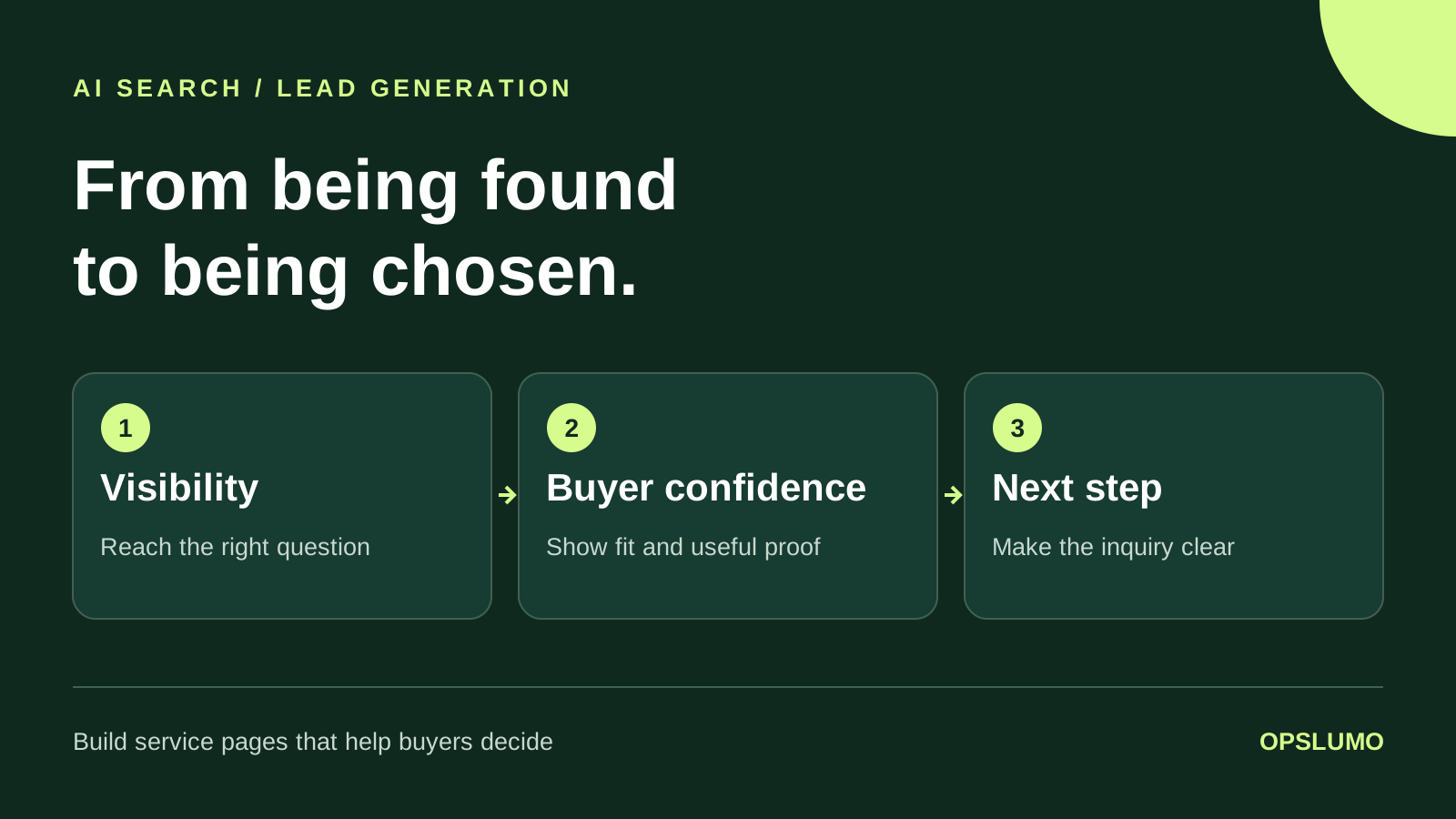
Conclusion: visibility starts consideration; evidence makes a business easier to choose.
The signal: Google now gives some site owners page-level reports for appearances in generative Search features. LinkedIn describes the B2B consequence as a shift from visibility to buyability: buyers need a defensible reason to put a supplier on the shortlist, not merely a familiar name.
The practical meaning: An AI Overview, AI Mode answer, or assistant recommendation may introduce a company before a prospect opens its website. When the prospect does click—or asks a colleague to evaluate the company—the service page must reduce uncertainty: who the offer is for, what it includes, what it does not include, why the firm is credible, and what happens next.
That is not a reason to stuff pages with terms such as “AEO,” “GEO,” or “AI SEO.” It is a reason to make commercially important pages more specific and more useful.
Conclusion: a service page needs an answer, proof, and a next step.
A buyer-facing page does not need to be long to be convincing. It does need to resolve the questions that prevent action. Use this three-part test:
- Answer: State the service, ideal customer, problem, and delivery context plainly.
- Proof: Show process, scope, credentials, constraints, example outcomes, or original observations that make the claim checkable.
- Next step: Ask for the few details required to judge fit and explain what the prospect receives after submitting.
For example, “We help businesses with bookkeeping” is an answer only in the broadest sense. A stronger page might say: “We help U.S. service businesses with one to twelve months of QuickBooks cleanup before moving to a monthly close. We review the backlog, document missing records, and provide a cleanup scope before work begins.” That statement gives a buyer and a retrieval system real boundaries to work with.
Conclusion: put the evidence beside the commercial claim.
Many websites place all credibility on an About page and all selling language on a Services page. That separation creates needless work for a prospect. The most relevant proof belongs near the decision it supports.
For a bookkeeping cleanup offer, useful proof may include the software supported, the typical starting condition, an anonymized sample checklist, the handoff into monthly work, and the situations that require a separate quote. For an automation project, it may include the trigger, the systems involved, exception handling, the named reviewer, and the metric used to decide whether the workflow helped.
Be equally clear about limits. “We prepare a draft response for review; we do not automatically send pricing or make commitments” can increase trust more than a generic promise that an AI agent handles everything.
Conclusion: preserve the page context when a lead enters the workflow.
AI-led discovery creates a measurement and operations problem. A prospect who arrives from a specific service page has already supplied a useful signal: the problem they were trying to solve. A generic contact form often throws that signal away.
A lightweight lead workflow can preserve it. Record the landing page and campaign data; ask only the service-specific questions that change qualification; create a concise summary; assign an owner; and start a response-time reminder. AI can help extract details and prepare a draft, while a person reviews promises, pricing, exceptions, and the final reply.
Consider a prospect who lands on a “CRM follow-up automation” page. Instead of a blank message field alone, the form could ask which lead source is losing context, which CRM is used, typical weekly inquiry volume, and the current response target. The team receives a useful starting brief rather than another inbox mystery.
Conclusion: measure the handoff from exposure to qualified demand.
Google's generative AI reports measure appearance, not commercial impact. Track the full chain so an attractive dashboard does not replace a business result:
- Exposure: appearing pages, AI impressions, countries, and devices.
- Engagement: clicks, branded searches, relevant return visits, and page-level behavior.
- Qualification: source-aware inquiries, missing information, owner assignment, and response time.
- Business value: meetings held, accepted opportunities, unsuitable-lead rate, and revenue.
A service page can gain AI visibility but attract the wrong geography or weak-fit questions. Conversely, a smaller increase in relevant exposure can matter if it improves the quality of the conversations that reach the team. The aim is not to maximize an isolated AI metric. It is to make the path from discovery to a useful first conversation reliable.
Conclusion: run one focused 30-day improvement cycle.
Choose one service page that matters commercially. Write down its current impressions, clicks, inquiries, and qualified-inquiry rate. Improve its answer, add evidence that belongs beside the claim, link to the next relevant service or proof page, and make the inquiry step source-aware. Record the change date.
After 30 days, inspect both search and operational data. Keep what improves relevant discovery or lead quality. If traffic rises but the team receives less useful requests, revise the page, qualification questions, or offer boundary rather than declaring success.
The practical rule: AI search can surface your business. A clear service page and a human-reviewed workflow determine whether that visibility becomes a conversation worth having.
Where to start
Start with an SEO and AI-search readiness audit to identify pages that are hard to discover or hard to evaluate. Then connect the strongest service pages to a measurable lead-generation path and a human-reviewed follow-up workflow. For the measurement layer, see our framework for interpreting AI search impressions in Search Console.
Sources and methodology
This article uses current platform announcements and published B2B research. The sources describe market signals and product reporting; they do not guarantee results for another website.